-
Yukio Mishima on Visconti’s “The Damned”: Dangerous Decadence

In its Wagnerian manner, its German grotesquerie, its transvestitism, its nervous insanity, its ponderousness, its symphonic sense of psychological danger, its worship of the body, its unceasing dramatic tension, its excesses, its obsession with hurling every single character toward tragedy and death, its ostentation, its sensuality, its love of ritual and ceremony, its intoxication, and…
-
Art, Life and Spirit in Emile Cioran’s and Thomas Mann’s Youthful Works

But what is it, to be an artist? Nothing shows up the general human dislike of thinking, and man’s innate craving to be comfortable, better than his attitude to this question. When these worthy people are affected by a work of art, they say humbly that that sort of thing is a ‘gift’. And because…
-
5 Films Reflecting the Tension Between Artistic Types and the ‘Bourgeoisie’

In his Reflections of A Unpolitical Man, Thomas Mann writes that he wants to restore the dignity of the term Bürger, (almost untranslatable in English, but ‘citizen’ is the closest translation), since “certain literary circles” have utterly degraded it. He writes that bourgeois is the favorite affront of the littérateurs, and quotes Wagner saying that…
-
In Werner Herzog’s Words: The Origins of Cinema

“Film is not analysis, it is the agitation of mind; cinema comes from the country fair and the circus, not from art and academicism.“ ̶ Werner Herzog Herzog’s understanding of the origins of cinema in the country fair and circus, not the academia, cannot be stressed enough. When he was making his Aguirre, the Wrath…
-
Norte, the End of History (2013): Lav Diaz’s Take on “Crime and Punishment”

The film title refers to the Philippines’ northern province Ilocos Norte, where Diaz’s film takes place. In this way, the narrative has a specific locus, it is, at least provisionally, a hint that it is bound to the territory and the nation of the Philippines. In many ways it is, but in many more, it…
-
Three Colors: Red (Zagreb, Croatia; October 4th, 2020)

“And you will shed tears of scarlet.” Quote from Cowboy Bebop: “The Real Folk Blues (Part I)” More than half a year has passed since the earthquake and the great damage it has done to my home, and I have changed two abodes. One was in the western part of the city, near the river,…
-
On the Role and Power of Film Criticism

For Martin Heidegger, the role of linguistic poetry is in preserving the primordial poetry of language. “Other modes of poetry, such as visual arts and architecture, only occur within the clearing of beings, which is opened by language.”[1] In Heidegger’s words: “Building and plastic creation, on the other hand, happen, always and only, in the…
-
Early Spring (Zagreb, Croatia; May 1st, 2020)

To keep this blog film-related, I decided that the title of each subsequent post dealing with my experiences after the Zagreb earthquake, and the destruction of my home, will be the film title of a great film I love, with a symbolic undertone. For this post, I chose Yasujirō Ozu’s Early Spring. Although it is…
-
Transgression of the Sexual Taboo in Nagisa Oshima’s “In the Realm of the Senses”

The concept of “obscenity” is tested when we dare to look at something that we desire to see but have forbidden ourselves to look at. When we feel that everything has been revealed, “obscenity” disappears and there is a certain liberation. When that which one had wanted to see isn’t sufficiently revealed, however, the…
-
In Alejandro Jodorowsky’s Words: The Danger of Symbolism in Imagery
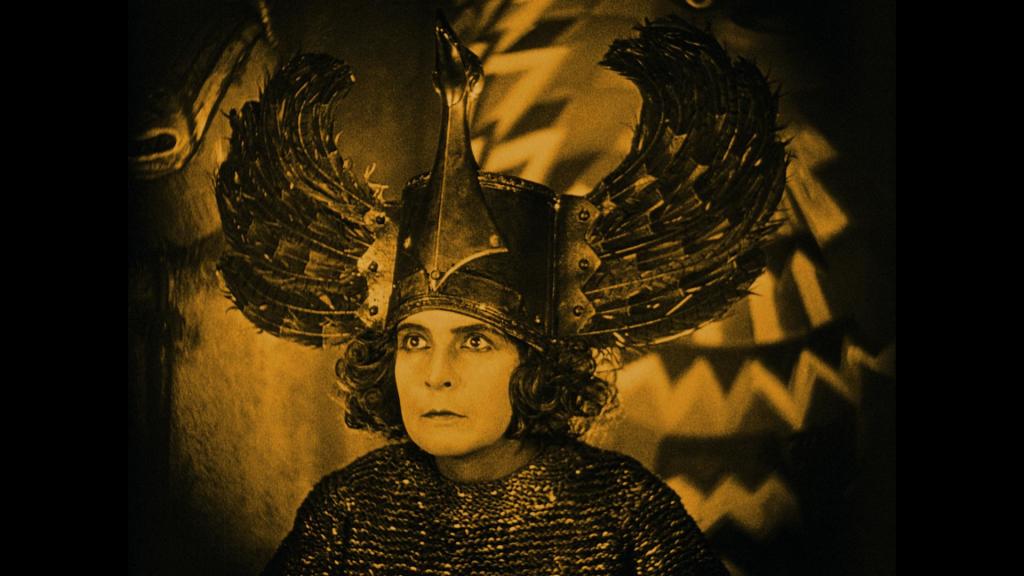
“What I am trying to do when I use symbols is to awaken in your unconscious some reaction. I am very conscious of what I am using because symbols can be very dangerous. When we use normal language we can defend ourselves because our society is a linguistic society, a semantic society. But when you…
-
Subscribe
Subscribed
Already have a WordPress.com account? Log in now.
 Vigour of Film Lines