Cinema
-

Brothers Grimm’s fairy tales are now part of our collective imagination (I will not use Jung’s term “collective unconscious” since it is a bit problematic). Isabel dos Santos, the author of the article about Brothers Grimm “Reluctant Romantics”, writes: “Throughout the entire world, fairy tales have for generations played a significant part in children’s upbringing…
-
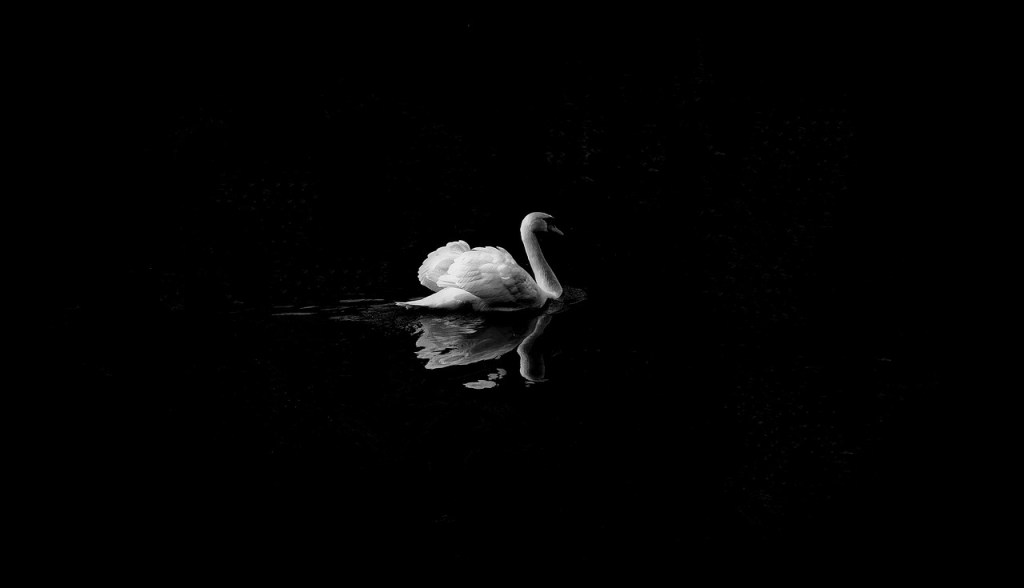
Aronofsky’s Black Swan follows the ballet dancer Nina, who gets a part in the production of Tchaikovsky’s Swan Lake. She is fragile, innocent, fearful and pure, but lacks the feel for playing the Black Swan, while she is a perfect cast for the White Swan. In the performances of Tchaikovsky’s ballet, the same ballerina sometimes…
-
In the thirteenth chapter of the first epistle to the Corinthians, St Paul says: “For now we see through a glass, darkly; but then face to face: now I know in part; but then I shall know even as I also am known”. In these St Paul’s words, practically the whole film Through the Glass…
-
I believe Ingmar Bergman, Vittorio De Sica, and Federico Fellini are the only three filmmakers in the world who are not just artistic opportunists. By this I mean they don’t just sit and wait for a good story to come along and then make it. They have a point of view which is expressed over…
-

[On Hitler: Downfall (2004)] What people need is for Hitler to actually represent evil itself. But what is evil itself? That means nothing to me. I have to perform a living human being (…) We know how to judge Hitler. We don’t need another film that condemns him. We already know where we stand on…
-

A film director has to convince a great number of people to follow him and work with him. I often say, although I am certainly not a militarist, that if you compare the production unit to an army, the script is the battle flag and the director is the commander in the front line. From…
-

An artist never works under ideal conditions. If they existed, his work wouldn’t exist, for the artist does not live in a vacuum. Some sort of pressure must exist. The artist exists because the world is not perfect. Art would be useless if the world were perfect, as man wouldn’t look for harmony but would…
-

The bad education I received at school was rectified when I went to the cinema. My religion became the cinema. Of course one could create one’s own belief system, and anything that helps or supports you in life can be seen as covering the function of religion. In that sense you could consider cinema my…
-

To the poet, to the philosopher, to the saint, all things are friendly and sacred, all events profitable, all days holy, all men divine. Ralph Waldo Emerson We might add that this applies to the filmmakers like Paolo Sorrentino as well. Sorrentino portrays the holiness of days passing and the divine in men with particular…

