At the start of his career as an animator, Hayao Miyazaki worked at studio Todei Doga in Tokyo. He quickly became disillusioned with it and almost quit the company. He later recalled: “Had I not seen The Snow Queen during a film screening hosted by the company labor union, I honestly doubt that I would have continued working as an animator.” When Ghibli Museum re-released it in 2007, on the poster there was a blurb from Miyazaki: “my destiny and my favorite film”. The film tells of the dangers of disillusionment, forgetting who you are and what you love, of becoming cold and indifferent, and this might have beeen decisive for the young animator. The Snow Queen is based on a fairy tale by Hans Christian Andersen, and tells the story of a little boy Kay and a girl Gerda, who cherish each other, and have developed a deep and loving friendship. Gerda says to Kay, that she grew a white rose for him, while Kay grew a red rose for her. They put it in a pot to be together, like they are, to be inseparable, just like them, to be friends, just like them, and to love each other, just like them.
During winter evenings, Gerda’s grandmother told them stories by the fireplace. She told them that the snowflakes come from the far north. “They fly here over cold seas, in icy winds, through blizzards and fogs. They are loyal servants of the Snow Queen.” She is made entirely of ice, beautiful, but her eyes are as cold as stars. During winter nights, she even comes to places where people dwell, and when Gerda sees her at the window and becomes afraid, Kay says that he will melt the Snow Queen on a hot stove if she ever comes near them. The Snow Queen hears this, and enchants the icicles so that when a foolish person gets a splinter in the eye, he will only see bad things around him, and if he gets a splinter in his heart, he will become evil and do only evil deeds. She does this to Kay, to avenge herself since he told that he will melt her (she saw this while peering through their window), and he becomes enchanted by the splinters. This notion of seeing only bad things around him can be understood in Nietzsche’s terms. He speaks of ressentiment as a sort of an “evil eye”, which makes the person who feels disilusioned and exhausted, who suffers from some kind of prolonged weakness, to see things in a way which makes them ugly and undesirable.
Nietzsche wrote that this is the great danger of weakness, to become trapped by ressentiment, to see things in a way which does not advance life any further; this kind of reasoning becomes harmful to life. Kay becomes mean to Gerda, he mocks her, drives the sled too fast so that she falls off it, and when she cries, he laughs. The Snow Queen takes Kay away with him, she tells him: “We’ll fly away to a wondrous kingdom. Once you’re there you’ll forget everything. Your heart will turn to ice. You will know neither joy nor grief, only calm and cold. That’s happiness.” This is another danger and a trap in which a person who suffers can fall into, to desire to feel nothing, not joy nor grief, but become calm and cold as ice, and call this state “happiness”. Nietzsche would call this kind of resignation and negation of life a form of nihilism, a state in which the soul claims that it desires nothing, in order not to feel grief, it is ready to relinquish joy as well. This might evocate Schopenhauer’s philosophy, which teaches that we must let go of pleasure, and the things which might bring us suffering. In Snow Queen’s words, not to feel joy or grief, that is happiness. Calmness of the heart, even if possibility of joy is sacrificed, for this kind of sage is a desirable outcome.
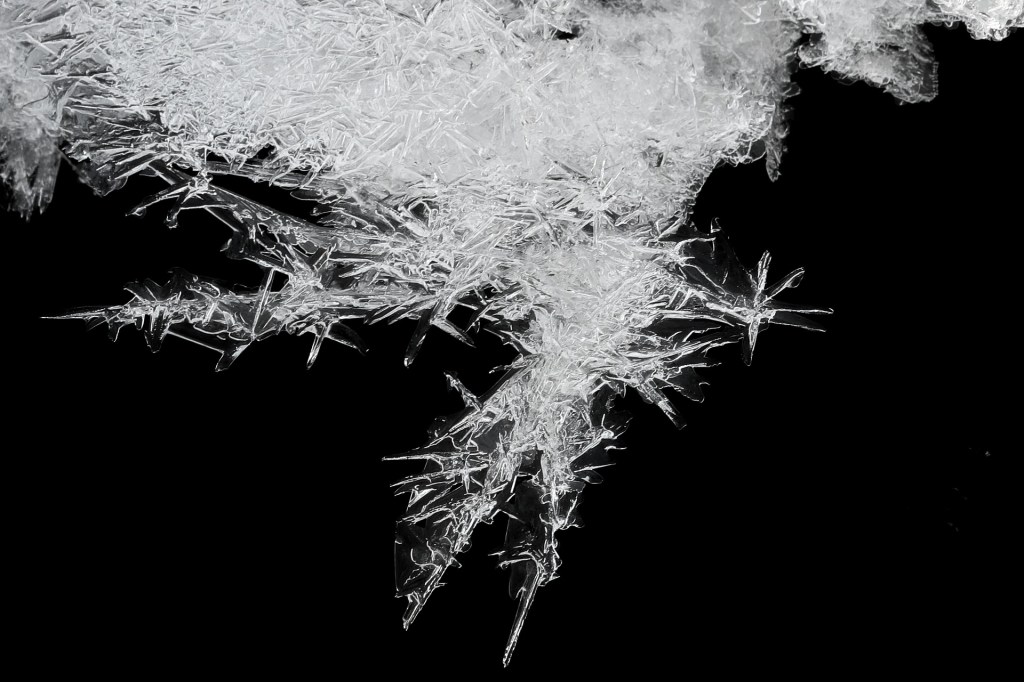
Gerda embarks on a dangerous journey to bring Kay back home, and return his soul to a state in which it was. She takes her new red shoes with her, but gives them as a gift to the river, so that it can tell Gerda where Kay is. In The Snow Queen, even inanimate objects like a river or a door, have a will of their own, and they help Gerda on her way to save her sworn brother Kay. An old woman who knows magic enchants her and makes her forget everything, so that she can have Gerda beside her. But seeing a white rose makes Gerda recall Kay and the reason for her journey. This motif of forgetting and remembering is of supreme importance in the film, since the Snow Queen makes Kay forget who Gerda is as well. Under her influence, he starts to think that crystals made of ice are more beautiful and precise than real flowers, but they have no scent, he notices. The Snow Queen replies: “Kay, I told you many times, the aroma of flowers, beauty and joy, poetry and love… those things do not exist. You must forget about all that.” At first he says he doesn’t remember, but then, he recalls Gerda and remembers what love is. The Snow Queen laughs, and tells him that he will forget her as well. Meanwhile, Gerda tries to find Kay, and by a quirky guidance of a bird that talks, she believes that he is with a princess in a castle. She tries to get to him and enters the castle by night, only to find another boy with blond hair.
Nevertheless, the princess is touched by her story and gives her a golden carriage so that he can find Kay. Noticing her golden carriage, a group of thieves attacks her, tears the carriage apart, and puts her in a dungeon with the animals which were trapped there before. Little Robber Girl, a crude girl of defiant spirit, keeps three birds there, which were saved by their dying mother as the Snow Queen turned her surroundings to ice when she took Kay with her. Thus, love saved the three little birds, now fully-grown, and they tell Gerda where Kay is, far, far in the north. Little Robber Girl, moved by the story Gerda tells her, although she supposedly abhors the sentimentality of it, decides to help Gerda, and releases the animals, along with a reindeer who carries Gerda on his back all the way to the far north where the Snow Queen’s castle is. When Gerda finally finds Kay, she hugs him, and the splinters fall out of his eye and heart, he remembers Gerda, and they are together again. The Snow Queen, beautiful and terrible on her throne, slowly melts away as if she never existed in the first place. It seems as if she never existed at all as a physical being, that she was just a manifestation of our own hearts which can grow cold, forget the ones we love, or things we love (animation perhaps).
She represents our tendendencies to see the world as a worse place than it really is, when we are exhausted and disilussioned, to distance ourselves from others, from nature, to create artifical products which we deem more precise and beautiful than the ones nature gave us in her abundant generosity. And finally, to alienate ourselves both from other human beings and nature. At this point, we can see many motifs which were later developed in Studio Ghibli’s animated films directed by Hayao Miyazaki. The Little Robber Girl is similar to the female protagonist from Princess Mononoke, Gerda is a relentless and strong female protagonist which is similar to Miyazaki’s female protagonists, Sheeta from Castle in the Sky, Sophie from Howl’s Moving Castle, and many more. Also, throughout all Hayao Miyazaki’s films there is a notion of a deep and lasting friendship between male and female characters, who love each other and help each other to find their true selves, but don’t end up together romantically. When Gerda crosses the river at the beginning of her advanture, she passess through a path which almost leads to another dimension, a fairytale-like world full of surprises and adventures, just like passing through a forest path in My Neighbor Totoro and the one in Miyazaki’s latest film The Boy and the Heron. But most importantly, what The Snow Queen teaches us, is never to forget the wonders of our own world, no matter how cold it might be outside, we must not permit our hearts to become cold and indifferent, the world to become ugly, and magic to disappear. At least, it seems that The Snow Queen taught this to a young animator, Hayao Miyazaki.

