Tag: Writing
-
From “The Dawn of Man” to the 10,191 AG on Dune – “Everything Must Change So That Everything Can Stay the Same”

In the opening sequence of Stanley Kubrick’s 2001: The Space Odyssey “The Dawn of Man”apes are seen fighting over resources, more concretely, a hole filled with water. We see the violent beginnings of human race in the pre-historic times, and in the famous scene the very piece of bone which is used to beat down…
-
The Darkening of Valinor in J.R.R. Tolkien’s “Silmarillion” and its Possible Romantic Influence

In The Lord of the Rings: The Rings of Power, Valinor, the Blessed Realm is shown before the light of the Two Trees was dimmed, the eternal light shone on the land of the gods. The destruction of the Two Trees and its Light is briefly surmised by Galadriel: “We thought our light would never…
-
Black Horse [Poem from the Yet Unpublished Book of Verses]
![Black Horse [Poem from the Yet Unpublished Book of Verses]](https://vigouroffilmlines.com/wp-content/uploads/2022/06/black-horse.jpg?w=1024)
Black horse in golden chains/ in the middle of the main square lies…
-
Yukio Mishima on Visconti’s “The Damned”: Dangerous Decadence

In its Wagnerian manner, its German grotesquerie, its transvestitism, its nervous insanity, its ponderousness, its symphonic sense of psychological danger, its worship of the body, its unceasing dramatic tension, its excesses, its obsession with hurling every single character toward tragedy and death, its ostentation, its sensuality, its love of ritual and ceremony, its intoxication, and…
-
Three Colors: Red (Zagreb, Croatia; October 4th, 2020)

“And you will shed tears of scarlet.” Quote from Cowboy Bebop: “The Real Folk Blues (Part I)” More than half a year has passed since the earthquake and the great damage it has done to my home, and I have changed two abodes. One was in the western part of the city, near the river,…
-
Early Spring (Zagreb, Croatia; May 1st, 2020)
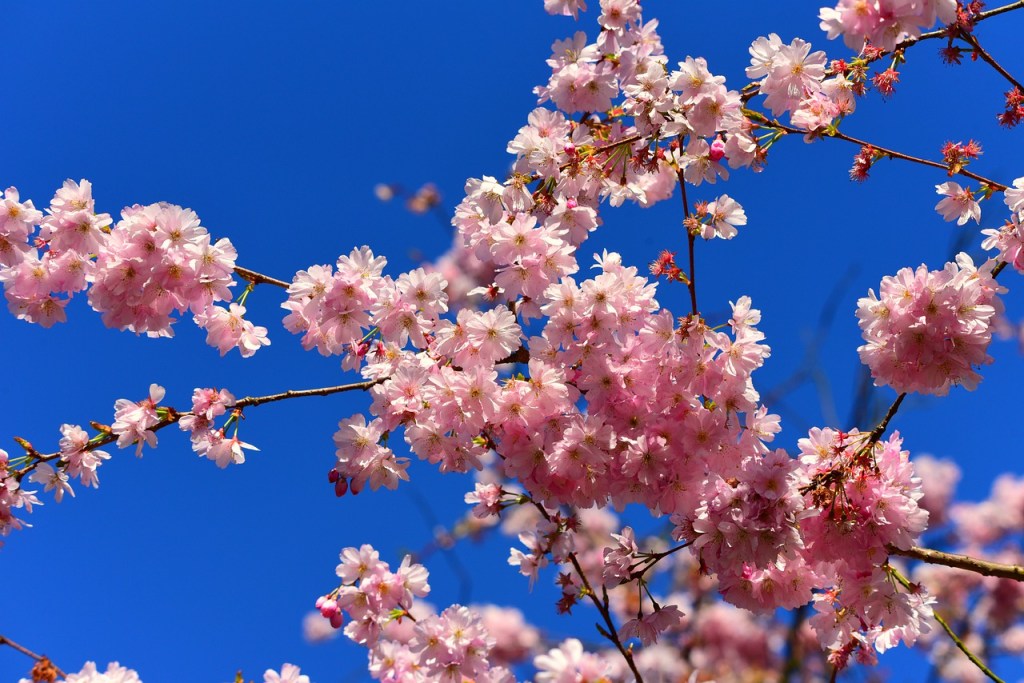
To keep this blog film-related, I decided that the title of each subsequent post dealing with my experiences after the Zagreb earthquake, and the destruction of my home, will be the film title of a great film I love, with a symbolic undertone. For this post, I chose Yasujirō Ozu’s Early Spring. Although it is…
-
The Nameless God: Ingmar Bergman’s Mythical Tale “The Virgin Spring”
Ingmar Bergman’s The Virgin Spring is an adaptation of a thirteen century Swedish ballad. Christanity became a state religion in Sweden in the twelfth century, while the process of Christianization of Sweden began roughly in the ninth century. This means that the tale we witness on the screen, portrays an age in which Christianity…
-
In Federico Fellini’s Words: Movies = Dreams
Talking about dreams is like talking about movies, since the cinema uses the language of dreams; years can pass in a second, and you can hop from one place to another. It’s a language made of image. And in the real cinema, every object and every light means something, as in a dream. Federico Fellini…
-
In Michael Haneke’s Words: Hidden
“I like the multiplicity of books, because each book is different in the mind of each reader. It’s the same with this film – if 300 people are in a cinema watching it, they will all see a different film, so in a way there are thousands of different versions of “Caché (Hidden)”. The point…
-
Decay of a Mortal God: Béla Tarr’s “Werckmeister Harmonies”
Valuska, a dreamy, and intellectually “slow” postman, with a poetic understanding of his surroundings, stages a little scene with a bunch of weary drunkards, in a bar, at the very beginning of the film. He arranges the drunkards to act the roles of the the Moon and the Earth, as they revolve around the Sun.…
 Vigour of Film Lines