Tag: Philosophy
-
5 Japanese Movies Filmed in the Spirit of Junichirō Tanizaki’s Beautiful Essay “In Praise of Shadows”

In a 1951 letter to his editor, while explaining his Silmarillion, J.R.R. Tolkien writes: “As far as all this has symbolical or allegorical significance, Light is such a primeval symbol in the nature of the Universe, that it can hardly be analysed. The Light of Valinor (derived from light before any fall) is the light…
-
In Paul Verhoeven’s Words: Leap Into the Unknown

Verhoeven compared making RoboCop with making Elle and once said that the experience was a “leap into the unknown”. He elaborates it in an interview: So you go to an unknown part of the world where you don’t know the people, and that’s frightening. But also, at the same time, if you do it, it turns…
-
Dionysiac Union with Art in Aronofsky’s “Black Swan”
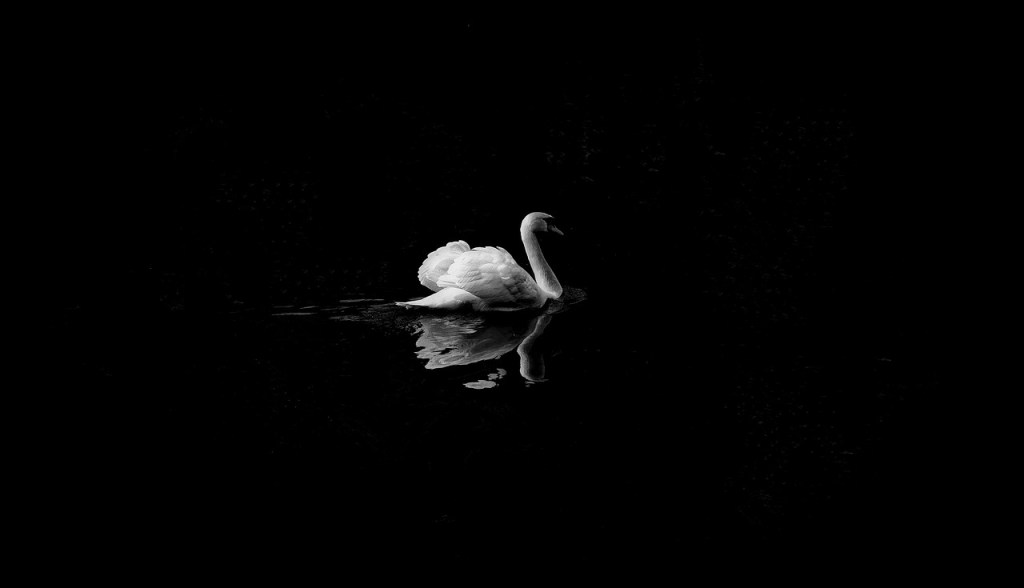
Aronofsky’s Black Swan follows the ballet dancer Nina, who gets a part in the production of Tchaikovsky’s Swan Lake. She is fragile, innocent, fearful and pure, but lacks the feel for playing the Black Swan, while she is a perfect cast for the White Swan. In the performances of Tchaikovsky’s ballet, the same ballerina sometimes…
-
5 Melancholic Films Which Can Inspire You Into Creativity (Melancolia II)
In Breugel’s painting The Hunters in the Snow, can see that the hunters are carrying a rabbit, a rather meager catch, which gives us the impression of the stresses they must endure. Since it is winter, this might be the only food they can provide for their families. Harris also says: “You can see the…
-
5 Melancholic Films Which Can Inspire You Into Creativity (Melancolia I)
While interpreting Albrecht Dürer’s engraving Melancolia I, professor of art history Bonnie Noble writes: “Dürer’s intellect, introspection, and unrelenting perfectionism may have driven him to a state of melancholia—what is now known as depression. Dürer’s famed Melencolia I engraving of 1514 has been called the artist’s psychological self-portrait, and indeed the image does convey the terrible struggle…
-
Confessions of Britain’s Most Violent Criminal – Refn’s “Bronson”

In the final lines of the chapter “The spectacle of the scaffold”, in his book Discipline and Punish, Michel Foucault writes about a great shift in the portrayal of criminals in fiction, which took place in the 19th century: “We are far removed indeed from those accounts of the life and misdeeds of the criminal…
-
What Makes us Human? – the Enigma of “Dark City”
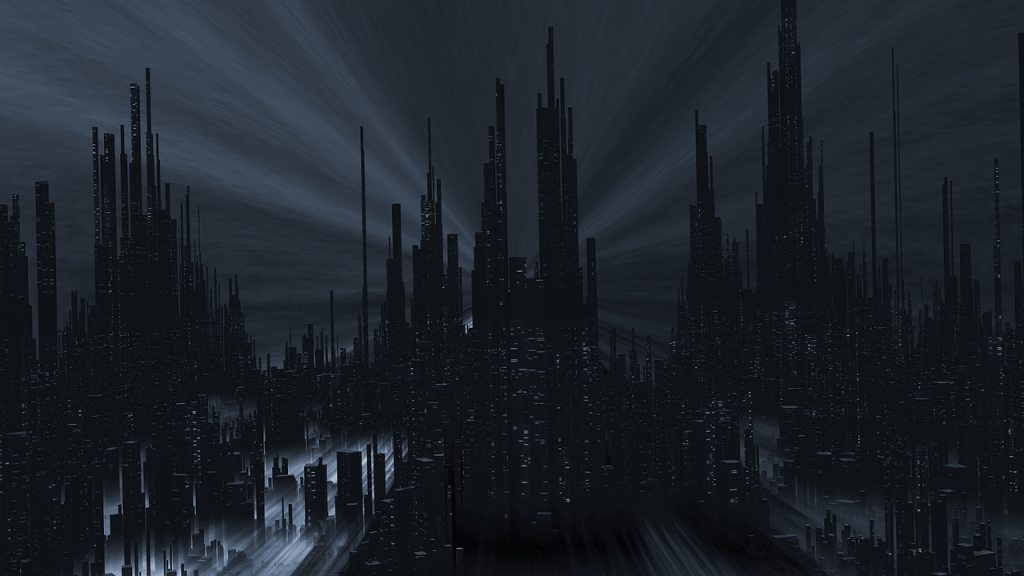
The film is set in a city where there is no sun, it is shrouded in eternal darkness. John Murdoch awakes in a bathtub, disoriented, not knowing his own name, or anything about himself. In other words, he is in the same position as the viewer, darkness (lack of cognition) pervades not only the external,…
-
5 Films To Be Watched As A Nietzschean Test of Will

When Nietzsche’s philosophy is taken into account, the phrase “test of will” cannot be found in the original texts of the philosopher, but it appears in the interpretations. To be more specific, in the interpretation of Cormac McCarthy’s novel No Country for Old Men, put on the silver screen by the legendary Coen Brothers. Chigurh,…
-
In Bruno Ganz’s Words “In Memoriam: An Angel Embodying A Demon”

[On Hitler: Downfall (2004)] What people need is for Hitler to actually represent evil itself. But what is evil itself? That means nothing to me. I have to perform a living human being (…) We know how to judge Hitler. We don’t need another film that condemns him. We already know where we stand on…
-
In Friedrich Nietzsche’s Words: Why Do We Like Comedies?

Perhaps I know best why man alone laughs: he alone suffers so deeply that he had to invent laughter. The unhappiest and most melancholy man is, as fitting, the most cheerful. Friedrich Nietzsche, The Will to Power ≈ 91 On German Pessimism This Nietzsche’s thought can be seen as a bridge between his youthful stage…
 Vigour of Film Lines