Tag: Art
-
Chastity and Carnality Shot in Monochrome: Pawlikowski’s “Ida”

Pawlikowski once said that “Ida doesn’t set out to explain history. That’s not what it’s about. The story is focused on very concrete and complex characters who are full of humanity with all its paradoxes. They’re not pawns used to illustrate some version of history or an ideology.” I find this to be immensely…
-
January – Black and White European Cinema Month

The first article I have published this year on this site was about a contemporary black-and-white Hungarian film Werckmeister Harmonies (2000), with the title “A Mortal God”. In this article, I explored the apocalyptic symbolism behind a decaying whale, and the pessimist philosophy of cosmic proportions presented in the film. Later, another article about a…
-
Decay of a Mortal God: Béla Tarr’s “Werckmeister Harmonies”

Valuska, a dreamy, and intellectually “slow” postman, with a poetic understanding of his surroundings, stages a little scene with a bunch of weary drunkards, in a bar, at the very beginning of the film. He arranges the drunkards to act the roles of the the Moon and the Earth, as they revolve around the Sun.…
-
In Béla Tarr’s Words: Evolution in the Understanding of Art, Life and Cinema
“At the beginning of my career, I had a lot of social anger. I just wanted to tell you how fucked up the society is. This was the beginning. Afterwards, I began to understand that the problems were not only social; they are deeper. I thought they were only ontological and when I understood more…
-
Silence (Martin Scorsese, 2016) “The Dark Night of the Soul”
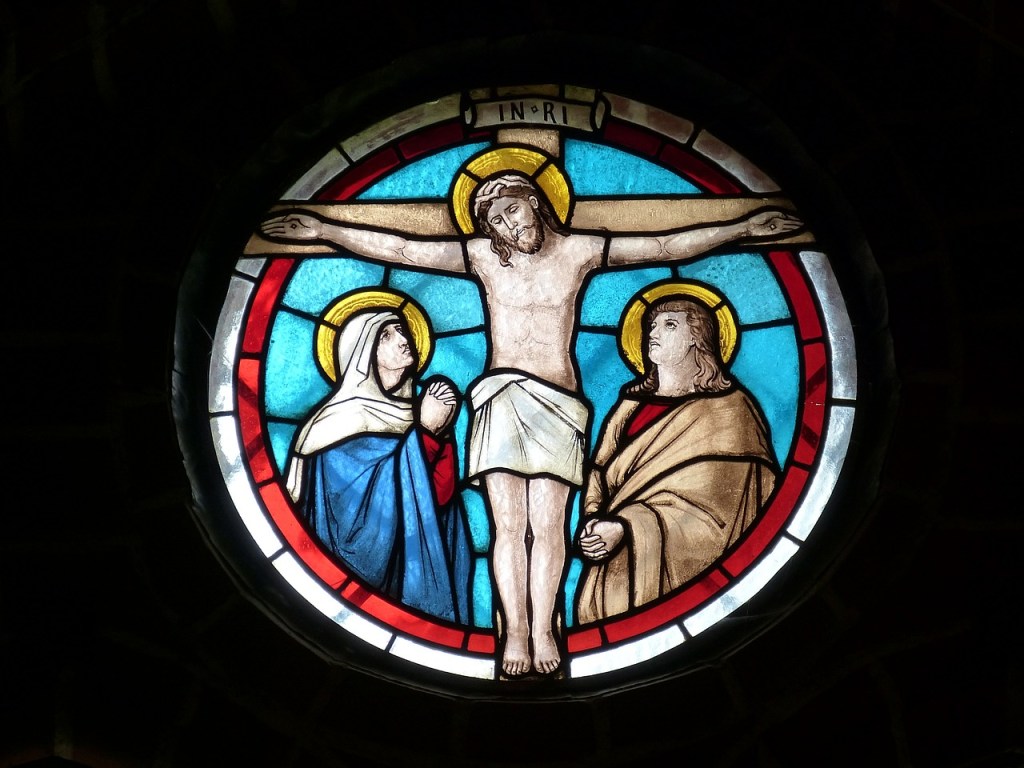
Earlier this year, I wrote an article about this very film, “Last Breaths of Christendom in the Land of the Rising Son”, emphasizing the role of the Japanese state (Tokugawa Shogunate) and the Hobbesian reading which implies that the state proscribes the teachings and religions practiced by the populace; in this case the state religion…
-
In Martin Scorsese’s Words: Cinema and Spirituality

When we talk about personal expression I’m often reminded of [Elia] Kazan’s film America America – the story of his uncle’s journey from Anitolia to America; the story of so many immigrants who came to this country from a very, very foreign land. I kind of identified with it and was very moved by it. Actually,…
-
Dionysiac Union with Art in Aronofsky’s “Black Swan”
Aronofsky’s Black Swan follows the ballet dancer Nina, who gets a part in the production of Tchaikovsky’s Swan Lake. She is fragile, innocent, fearful and pure, but lacks the feel for playing the Black Swan, while she is a perfect cast for the White Swan. In the performances of Tchaikovsky’s ballet, the same ballerina sometimes…
-
Vision of God as a Spider: Bergman’s “Through a Glass Darkly”
In the thirteenth chapter of the first epistle to the Corinthians, St Paul says: “For now we see through a glass, darkly; but then face to face: now I know in part; but then I shall know even as I also am known”. In these St Paul’s words, practically the whole film Through the Glass…
-
5 Melancholic Films Which Can Inspire You Into Creativity (Melancolia II)
In Breugel’s painting The Hunters in the Snow, can see that the hunters are carrying a rabbit, a rather meager catch, which gives us the impression of the stresses they must endure. Since it is winter, this might be the only food they can provide for their families. Harris also says: “You can see the…
-
5 Melancholic Films Which Can Inspire You Into Creativity (Melancolia I)
While interpreting Albrecht Dürer’s engraving Melancolia I, professor of art history Bonnie Noble writes: “Dürer’s intellect, introspection, and unrelenting perfectionism may have driven him to a state of melancholia—what is now known as depression. Dürer’s famed Melencolia I engraving of 1514 has been called the artist’s psychological self-portrait, and indeed the image does convey the terrible struggle…

